A hospital campus uniting care, research, and education
Client
CHUQ Enfant-JésusLocation
Quebec City, QC, CanadaCollaboration
Groupe A / Annexe U + DGM + Lemay + Jodoin Lamarre Pratte architectes + GLCRM Architectes, in consortium-
Discipline(s)
Architecture
A hospital campus uniting care, research, and education
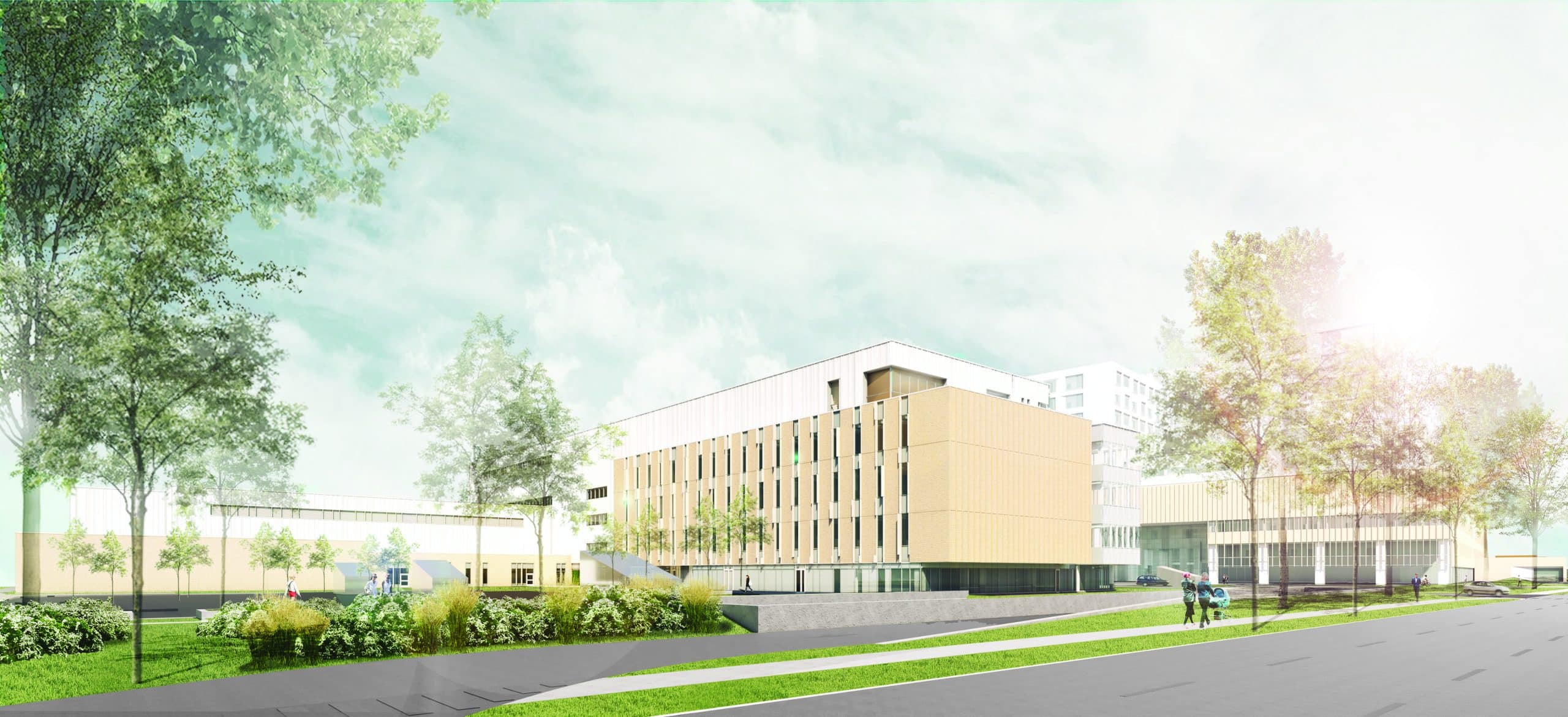
The expansion and redevelopment of the Enfant-Jésus Hospital in Quebec City is set to become the Nouveau complexe hospitalier (NCH) of the CHU de Québec. Conceived as a dedicated healthcare district, this 145,000 m² campus with 700 beds brings together 9 interconnected components: the Integrated Cancer Centre, the cancer research centre, the critical care building, the clinico-logistical platform, hospital accommodations, the thermal plant and cyclotron, the reconstruction of Wing D, and the reconfiguration of existing facilities.
These new buildings extend the existing fabric, forming a coherent urban ensemble that respects the scale and character of the surrounding streets. The concept is grounded in an identity-driven approach built around five founding elements: the “health and earth” roots (Enfant-Jésus), water (critical care), air (oncology), fire (research), and knowledge in service of life. Natural light plays a central role throughout, supporting patients therapeutically while improving quality of life for staff and aiding user orientation across the entire complex.
The complex’s materiality echoes the surrounding urban fabric. A contemporary reinterpretation of brick enriched by metal insertions introduces relief and vertical rhythm to the façades. Pedestrian connections toward Henri-Bourassa Boulevard weave the project into its neighbourhood and ensure a direct link to public transit.
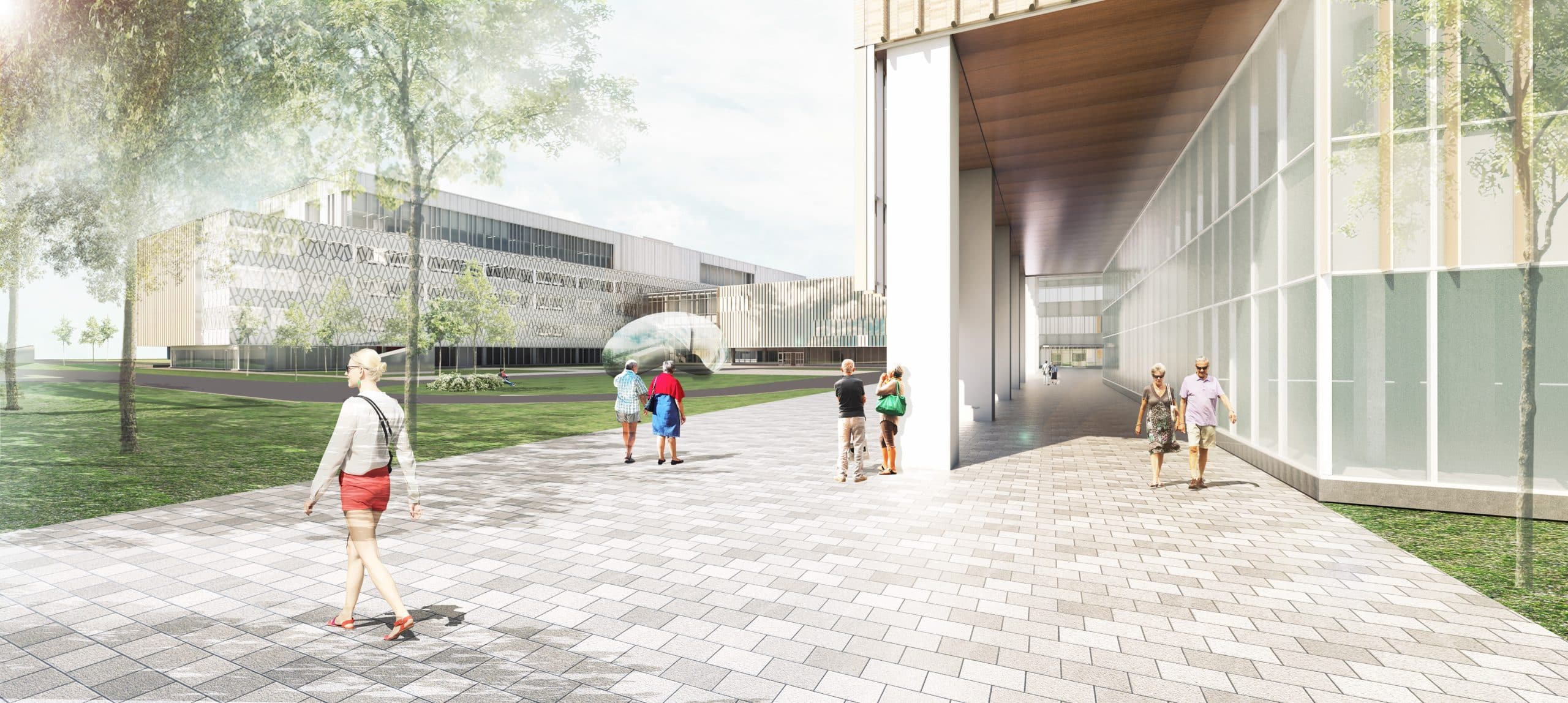
A nearly one-kilometre interior promenade threads all the pavilions together in an unbroken sequence, from the ambulatory hub of the former Enfant-Jésus Hospital to the Integrated Cancer Centre. Punctuated by thematic spaces, works of art, and visual breakthroughs onto outdoor gardens, it guides users through with clarity and ease despite the scale.
The landscape design carries this experience outward: a green esplanade along Henri-Bourassa forms the forecourt of the complex, while a sequence of gardens—each offering its own character of gathering, contemplation, or quiet reflection—enriches the journey. The Elm Garden, which preserves an existing elm tree that has outlasted its own decline, offers a place of renewal at the heart of the site. Fifteen artistic installations, including a sculptural staircase inspired by Darwin’s tree in the research centre, animate the complex and deepen the experience for patients, visitors, and staff. Rooted in its milieu and oriented toward the future, the Nouveau complexe hospitalier du CHU de Québec gives form to a campus where every detail of the built environment nurtures the well-being of those who care, work, and heal within it.