An intergenerational urban park designed for everyday community
Client
Ville de LongueuilLocation
Longueuil, QC, CanadaYear
In progressCollaboration
CIMA+-
Discipline(s)
Landscape Architecture
An intergenerational urban park designed for everyday community
Roland-Therrien Collective Park is a civic landscape space designed to bring people together while quietly addressing some of the city of Longueuil’s most pressing challenges. Located along a street that serves a cluster of community-oriented buildings, ranging from high school and youth centres to seniors’ housing, the park plays a central role in shaping a shared public space for residents of all ages and backgrounds.
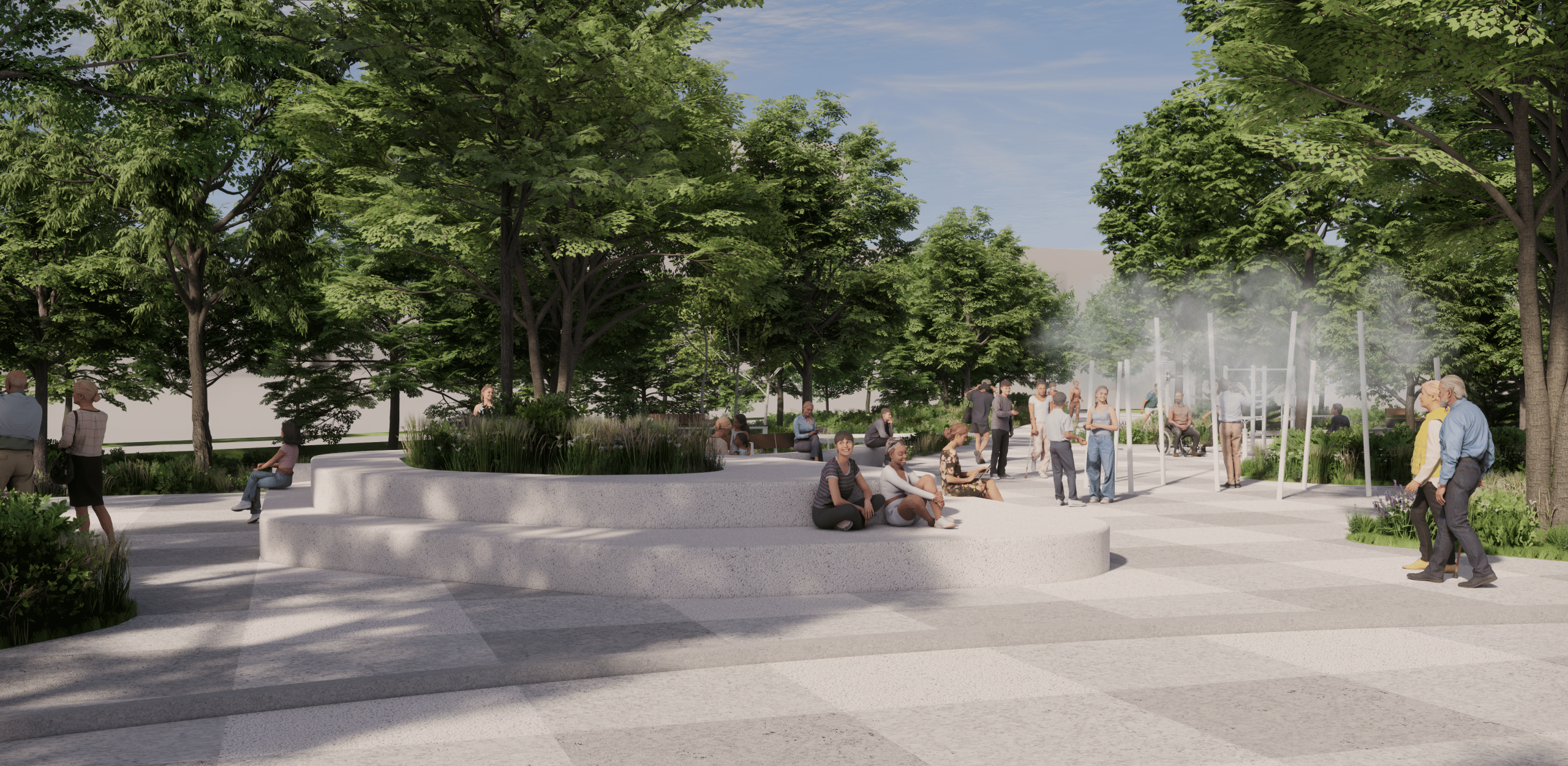
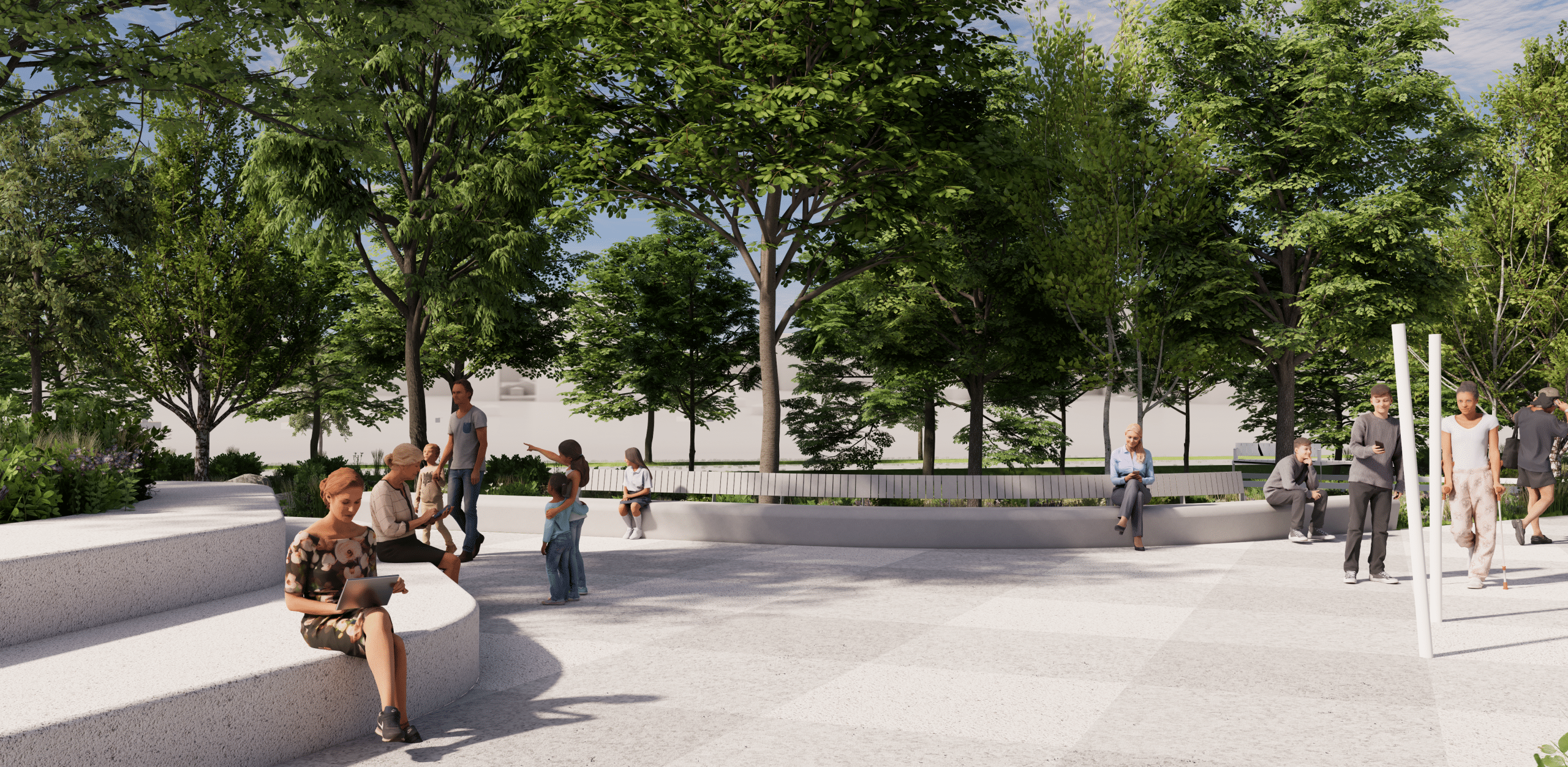
Imagined as a welcoming, flexible gathering place, the design supports outdoor meeting, resting, learning, and light exercise that are critical to healthy everyday social life. Rather than separating users by activity or age, the park favours a shared, intergenerational landscape where varied ways of occupying space naturally overlap.
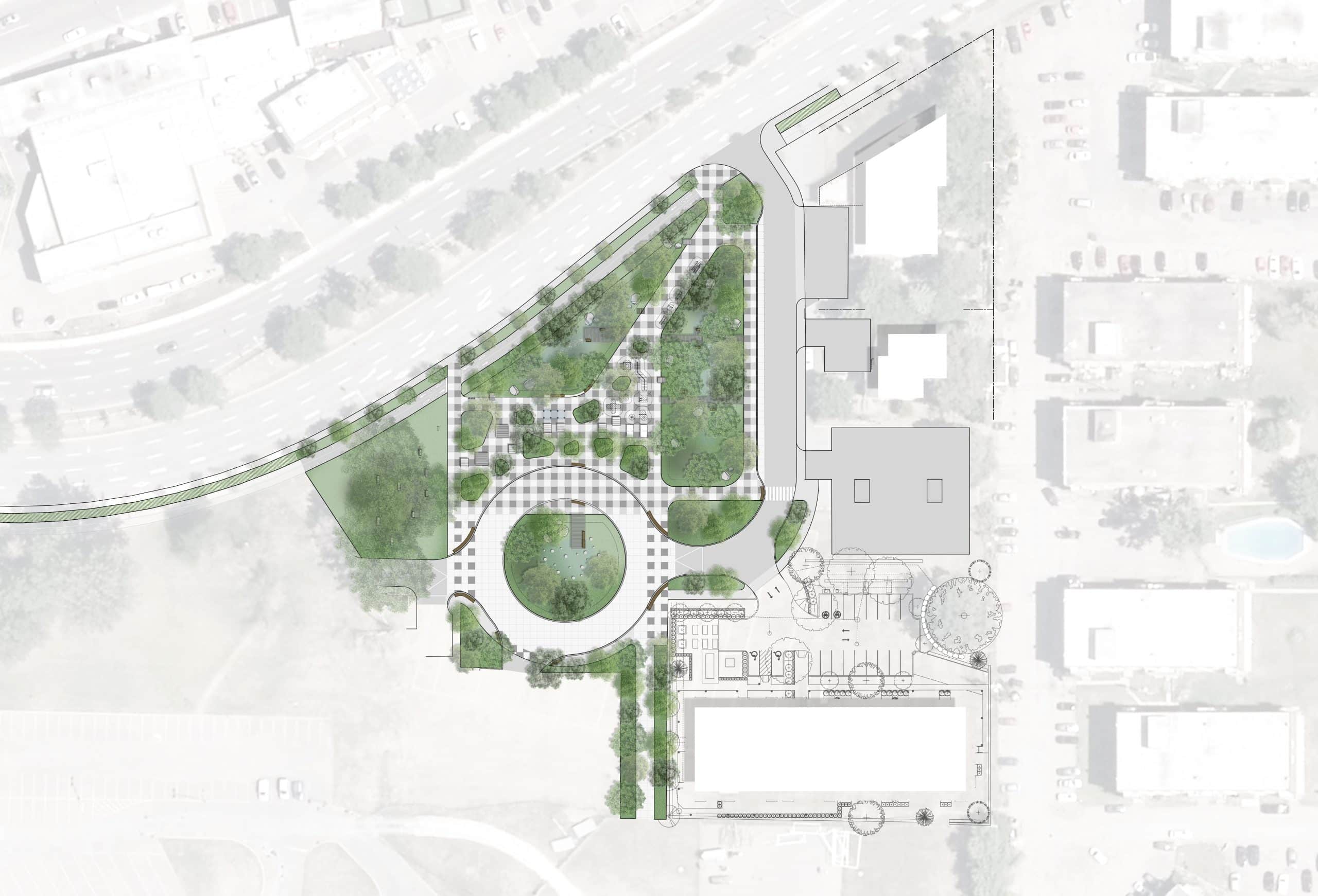
The park’s layout is organized around a clear spatial contrast, informed by the idea of a picnic blanket laid across the site as a shared ground for gathering. A central active area—shaped by platforms, seating, custom elements, and open plazas with restrained, timeless material choices—supports events, outdoor classes, and group activities. This core is encircled by quieter zones found in shaded retreats beneath existing mature trees and newly planted vegetation. Together, these conditions allow the park’s small footprint to accommodate both lively gatherings and more contemplative use without rigid zoning. Paving and surface treatments extend into the adjacent street, reinforcing a pedestrian-first, civic character while deliberately slowing vehicular movement.
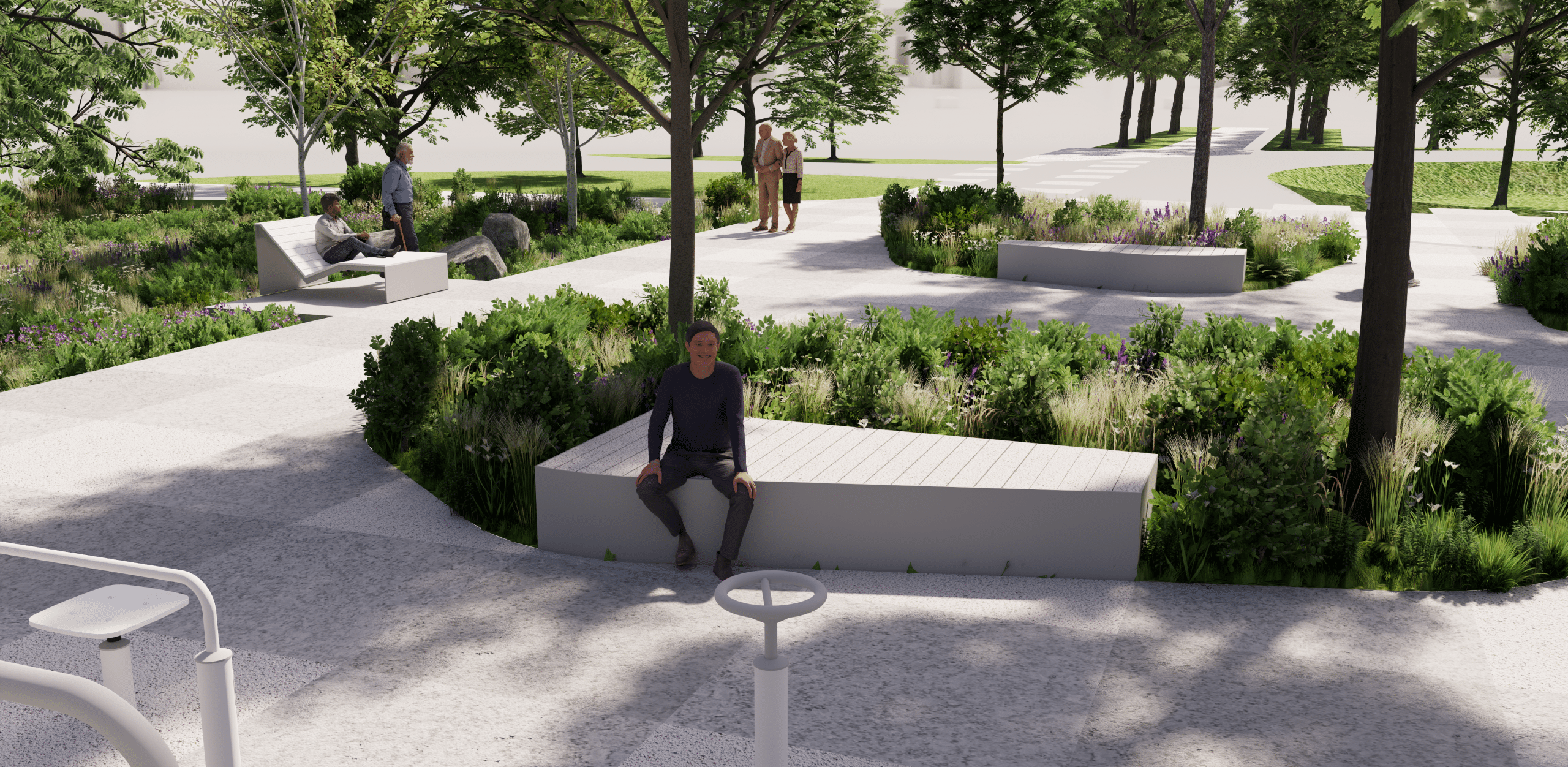
Stormwater management is treated as a spatial and ecological opportunity rather than a hidden technical system. The landscape collects, holds, and slows runoff generated by the surrounding area through shallow basins, rain gardens, and planted depressions inspired by dry riverbeds. Stone, layered planting, and varied textures ensure these spaces remain visually engaging while introducing biodiversity into a dense urban context. Native and climate-resilient plant species were selected to withstand periods of drought, flooding, and temperature variation, while minimizing long-term maintenance and irrigation needs.
Though modest in size, Parc Rolland-Therrien demonstrates how a compact public space can deliver outsized social and environmental benefits. By combining inclusive design, visible water management, and flexible programming within a compact urban site, the project offers a model for resilient, community-forward parks that can adapt alongside a changing climate.