Transforming a suburb into a connected, human-scaled downtown built around movement and community
Client
Ville de BrossardLocation
Brossard, QC, CanadaYear
2025-
Discipline(s)
Urban Design
Transforming a suburb into a connected, human-scaled downtown built around movement and community
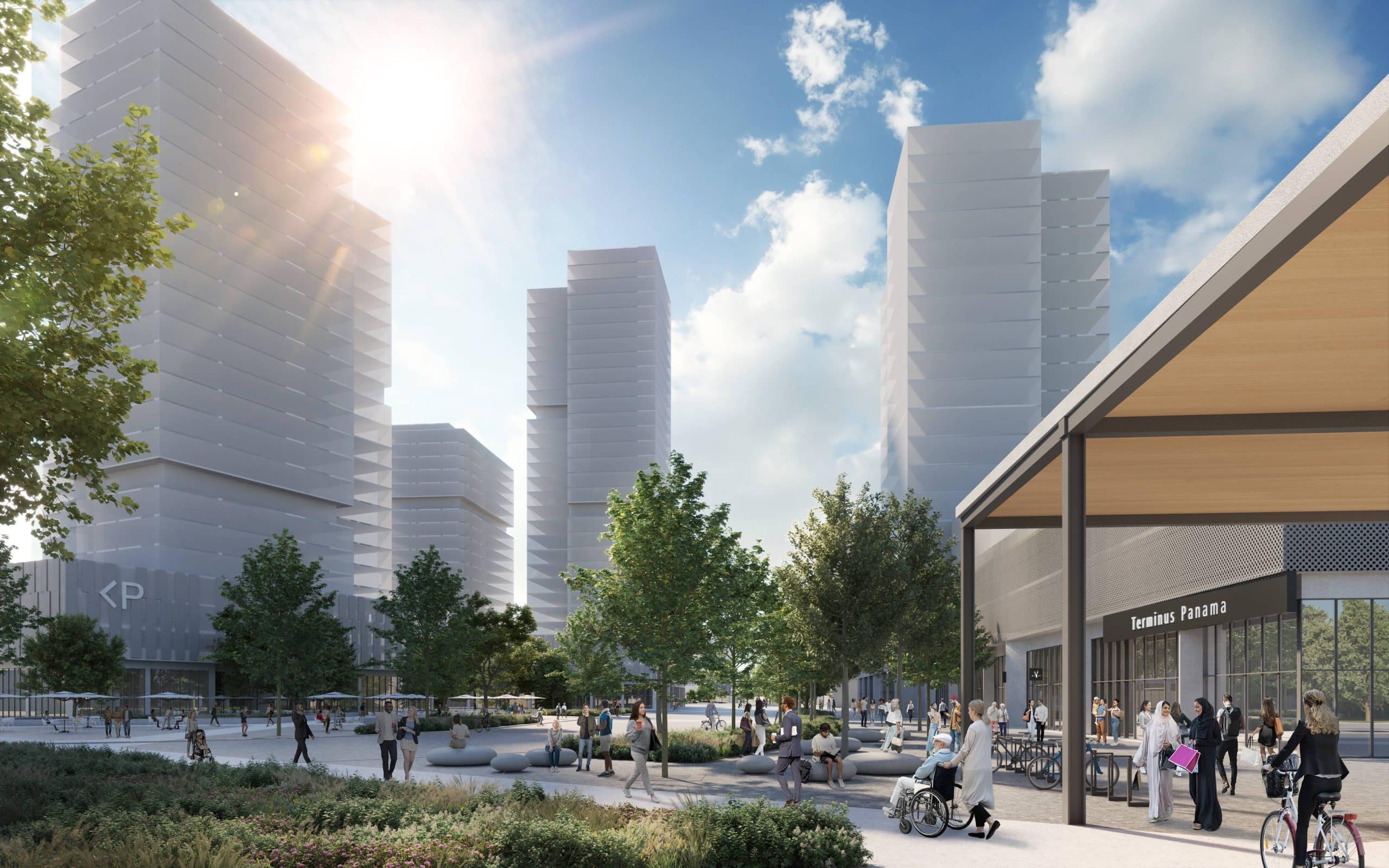
The vision for Centre-ville de Brossard proposes a new metropolitan centrality for Montreal’s South Shore through the redevelopment of the Panama Transit-Oriented Development sector surrounding the REM station of the same name. Conceived as a long-term transformation strategy, the project addresses a 165-hectare site characterized by fragmented commercial parcels, oversized road infrastructure, limited green space, and a disconnected fabric by restructuring it into a dense, mixed-use district organized around transit accessibility, active mobility, and civic life.
The vision establishes a coherent planning framework capable of accommodating significant growth while supporting and reinforcing both environmental performance and quality of life. The master plan introduces a diversified program combining housing, employment, retail, cultural facilities, sports infrastructure, and public amenities within walking distance of regional connections.
It is built around six design drivers: a civic esplanade, an active loop, a transit hub and redesigned boulevard, a green network, distinct neighbourhood rhythms and atmospheres, and an iconic architectural and landscape identity. Together, these guide the transformation of a concrete, car-dependent environment into an animated, human-scaled downtown with a renewed sense of place. A continuous active transportation loop bypasses Autoroute 10 to reconnect sectors historically separated by highway conditions, restoring a safe, direct route for walking and cycling, while Taschereau Boulevard is reconfigured from a drive-through corridor into a compact, planted, pedestrian thoroughfare where transit infrastructure and intensified development make the approach to the REM more comfortable and legible.
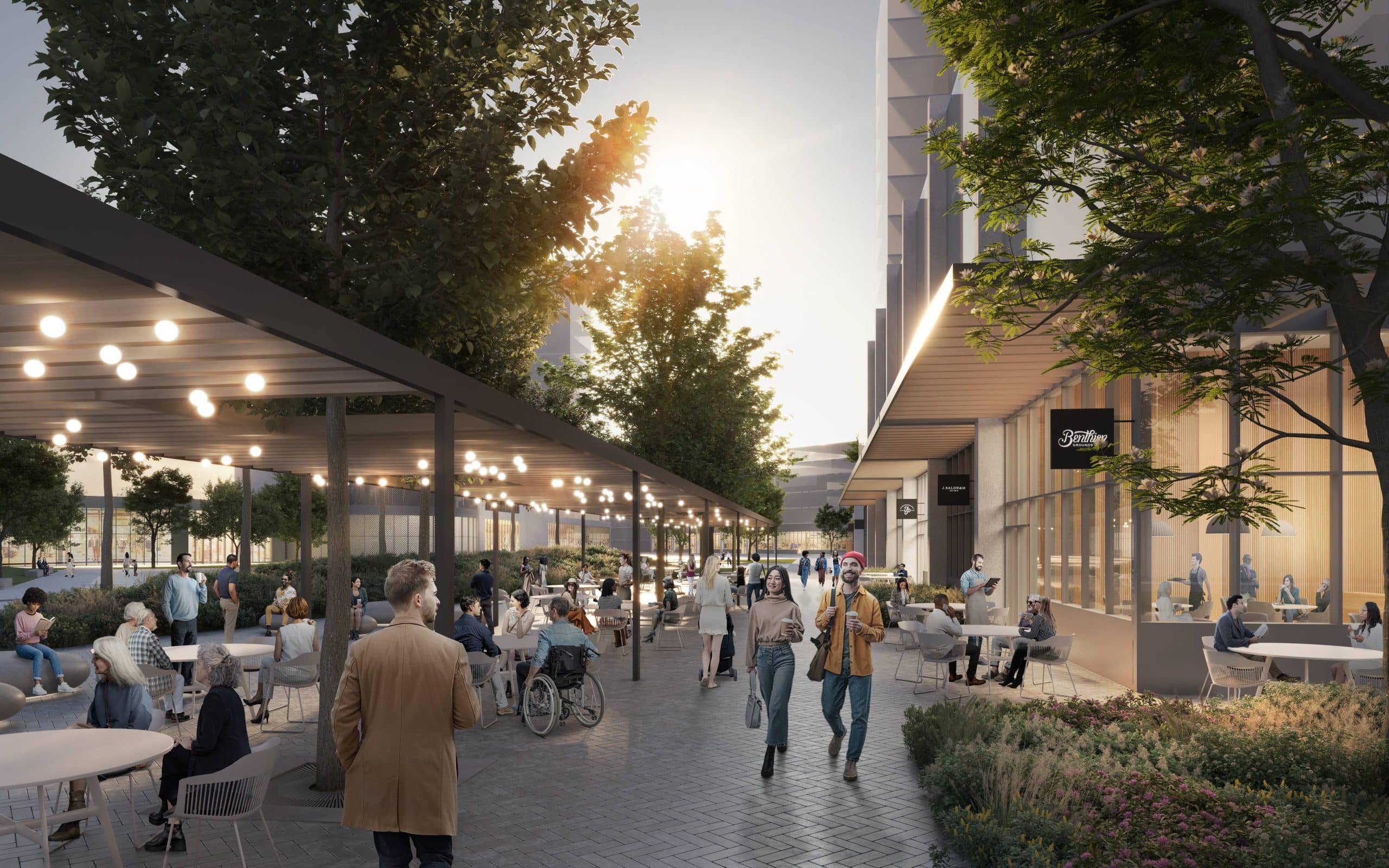
The public realm is organized through a linear spine linking the district’s major destinations and open spaces. The esplanade integrates plazas, landscaped thresholds, commercial frontages, public art, water features, and gathering areas that stay in use throughout the day, inviting people to linger and unwind over a coffee. This sequence culminates in a large central park acting as both ecological infrastructure and shared space, a convivial counterpoint where recreational facilities, community gardens, cultural programming zones, and flexible green surfaces adapt to seasonal use.
Based on an extensive participatory process involving residents, stakeholders, four real estate developers, and municipal representatives, the vision provides a clear mandate aligned with the collective aspirations expressed through public consultation, establishing a more connected, resilient, and inclusive metropolitan space to grow.